

Reviewed by Tai Chi Coach Editorial Team
Reviewed for source accuracy, safety framing, and scope clarity on 2026-06-25. This is educational wellness content, not diagnosis or treatment advice. See our Editorial Policy.
Free Chair Yoga for Seniors: A Printable Routine
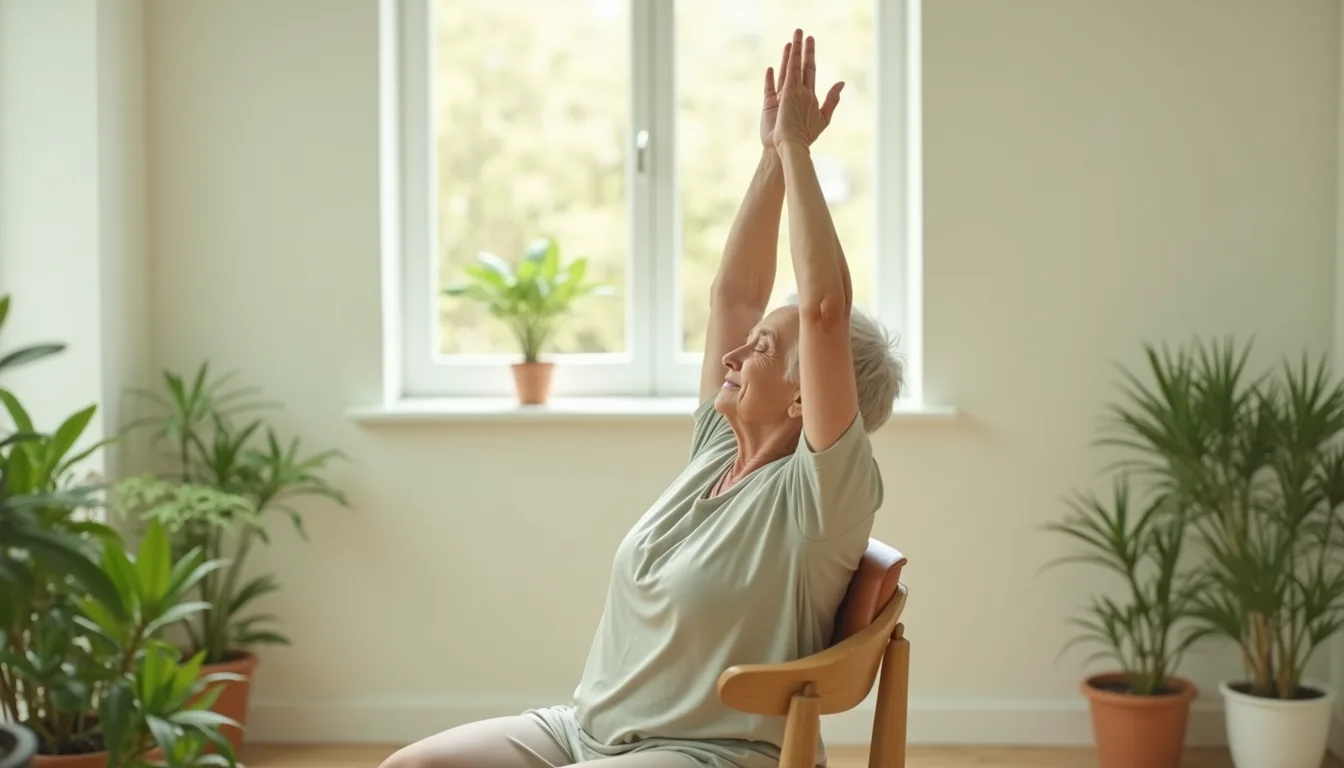
The fastest way to start free chair yoga for seniors is to grab a sturdy chair, sit tall, and move through a short sequence of gentle seated stretches paired with slow breathing. To make it easy, we've put the whole routine on one printable page so you can keep it next to your chair and follow along without a phone or screen. Download it below, then read on for how to do each move safely.
Free printable routine
Get the one-page seated routine as a PDF. Print it, put it on the fridge, start today.
🎁 Bonus: a printable 28-day tracking calendar
We can email it to you too — tick off each day and enjoy one gentle reminder a week.
No thanksWant the full printable pack?
28 illustrated movements + 28 full-page cards + 6 planners; $19.90 one-time.
Yes, show me the packYour PDF is opening in a new tab.- It's free and printable. The one-page routine above covers a full seated session: warm-up breathing, neck and shoulder releases, gentle twists, and a calm finish.
- No floor work, no equipment. Everything happens in a stable chair, which makes it ideal if getting up and down is hard or balance is a concern.
- Move slowly and breathe. The goal is comfort, not effort. Never force a stretch, and stop anything that causes pain.
- 10 to 15 minutes is plenty. A short daily session does more good than an occasional long one.
- Chair yoga and seated Tai Chi are close cousins. Both are gentle, seated, and breath-led; if you enjoy this, the flowing Tai Chi version is a natural next step.
What Is Chair Yoga for Seniors?
Chair yoga is a gentle, modified form of yoga that you do while seated in a chair (or using a chair for support). Instead of standing poses and floor mats, you stay safely seated and move your spine, shoulders, hips, hands, and feet through a comfortable range of motion, all while breathing slowly and deliberately.
It's especially friendly for older adults because it removes the two biggest barriers to movement later in life: balance worries and the difficulty of getting down to and up from the floor. You get the calming, joint-loosening benefits of yoga without the risk. If you can sit upright in a chair, you can do chair yoga.
The free printable PDF above gives you a complete beginner-friendly session in a simple, large-print layout, so there's no guesswork about what comes next.
Why Gentle Seated Movement Helps
Regular gentle movement supports mobility, circulation, and mood, and seated practice is one of the lowest-risk ways to get it. Slow, mindful exercise like this shares a lot with Tai Chi, which the National Center for Complementary and Integrative Health (NCCIH) describes as a gentle practice that may help with balance, flexibility, and a sense of well-being.
For seniors specifically, a short seated routine can help you:
- Loosen stiff necks, shoulders, and hips that tighten from sitting.
- Keep joints moving through their natural range so daily tasks feel easier.
- Pair movement with slow breathing, which many people find calming.
- Build a sustainable daily habit because it's quick and never intimidating.
If you'd like a version that adds the flowing, weight-shifting quality of Tai Chi while still staying seated, see our guide to seated Tai Chi. Chair yoga and seated Tai Chi are close cousins, and many people enjoy alternating between the two.
How to Use the Printable Routine Safely
Before you start, set yourself up for success and comfort:
- Choose the right chair. Use a stable, armless or fixed-arm chair with a flat seat and no wheels. Both feet should rest flat on the floor.
- Sit tall. Move slightly forward from the backrest, stack your spine, and relax your shoulders down away from your ears.
- Breathe through the nose. Let your breath lead each movement: gentle inhale to lengthen, slow exhale to soften deeper into a stretch.
- Stay in the comfortable range. A stretch should feel like a mild, pleasant pull, never sharp or pinching.
- Go slowly and rest as needed. There's no rush and no minimum. Pause whenever you like.
If you have a recent injury, surgery, dizziness, or a heart or blood-pressure condition, check with your doctor before starting and ask which movements to skip.
A Sample 10-Minute Seated Sequence
Here's the flow you'll find on the free printable PDF above, in order. Move slowly and breathe through each one.
| Step | Movement | What to do |
|---|---|---|
| 1 | Centering breath | Sit tall, hands on thighs. Take 5 slow breaths, feeling your ribs widen on the inhale. |
| 2 | Neck releases | Gently drop one ear toward that shoulder, hold a breath, return to center, then switch sides. |
| 3 | Shoulder rolls | Roll both shoulders backward 5 times, then forward 5 times, in slow circles. |
| 4 | Seated cat-cow | Inhale and open the chest; exhale and round the upper back. Repeat 5 times. |
| 5 | Gentle twist | Hold the side of the chair and rotate slowly toward it, then the other side. One breath each. |
| 6 | Ankle and wrist circles | Lift one foot, circle the ankle both ways; circle the wrists too. Switch sides. |
| 7 | Side stretch | Reach one arm overhead and lean gently to the opposite side. Breathe, then switch. |
| 8 | Closing breath | Hands on lap, eyes soft. Take 5 calm breaths to finish. |
That's a complete, gentle session in about 10 minutes. Repeat any step you enjoy, and skip anything that doesn't feel right for your body today.
Where to Go Next
Once chair yoga feels comfortable, you can gently expand your routine. If you're looking for movement designed for the over-50 stage of life, our Tai Chi for the 50-plus guide is a good companion. And when you're ready to add a little standing movement, Tai Chi walking is a slow, mindful way to bring this same breath-led calm into your steps.
To be clear and honest: the routine above is gentle, chair-yoga-style seated movement. If you'd like to learn the Tai Chi version, with its signature flowing arm movements and slow weight shifts, our free app walks you through it step by step with short, follow-along videos you can do right from your chair. You can download the app on the App Store whenever you're ready.
Complete free routine
Chair Yoga for Seniors: all 8 poses and the printable PDF
The full hub page with the whole sequence, the free PDF and the pricing stated up front.
Frequently Asked Questions
Is chair yoga safe for seniors with limited mobility?
Yes, for most people it's one of the safest ways to move because you stay seated the whole time, which removes balance and fall risk. Move only within a comfortable range and stop anything that hurts. If you have a recent injury, surgery, dizziness, or a heart or blood-pressure condition, check with your doctor first and ask which movements to skip.
How long should a chair yoga session be?
About 10 to 15 minutes is plenty for older adults, and a short daily session is more beneficial than an occasional long one. The free printable PDF above is built as a roughly 10-minute flow, but you can shorten it to just a few favorite stretches or repeat the ones you enjoy.
Do I need any special equipment?
No. You only need a stable, flat-seated chair without wheels, placed where both feet can rest flat on the floor. No mat, weights, or special clothing are required, just comfortable clothes you can breathe and move in.
How is chair yoga different from seated Tai Chi?
They're close cousins. Both are gentle, seated, and led by slow breathing, so they feel similar. Chair yoga focuses on holding and releasing stretches, while seated Tai Chi adds continuous, flowing arm movements and gentle weight shifts. Many people enjoy both; you can explore the seated Tai Chi version through our linked guide and the app.
Is the printable routine really free?
Yes. The download button above gives you the complete one-page routine at no cost, with nothing to sign up for. Print it, keep it by your chair, and use it as often as you like.
Next step
Try the gentle Tai Chi version, free
Enjoyed the chair routine? Our free app teaches the flowing, seated Tai Chi version with short follow-along videos you can do right from your chair, no experience needed. Download Tai Chi & Qigong: Easy Workout on the App Store and move a little gentler today.
Download the App