

Reviewed by Tai Chi Coach Editorial Team
Reviewed for source accuracy, safety framing, and scope clarity on 2026-04-13. This is educational wellness content, not diagnosis or treatment advice. See our Editorial Policy.
Seated Tai Chi For Seniors: What Actually Works?

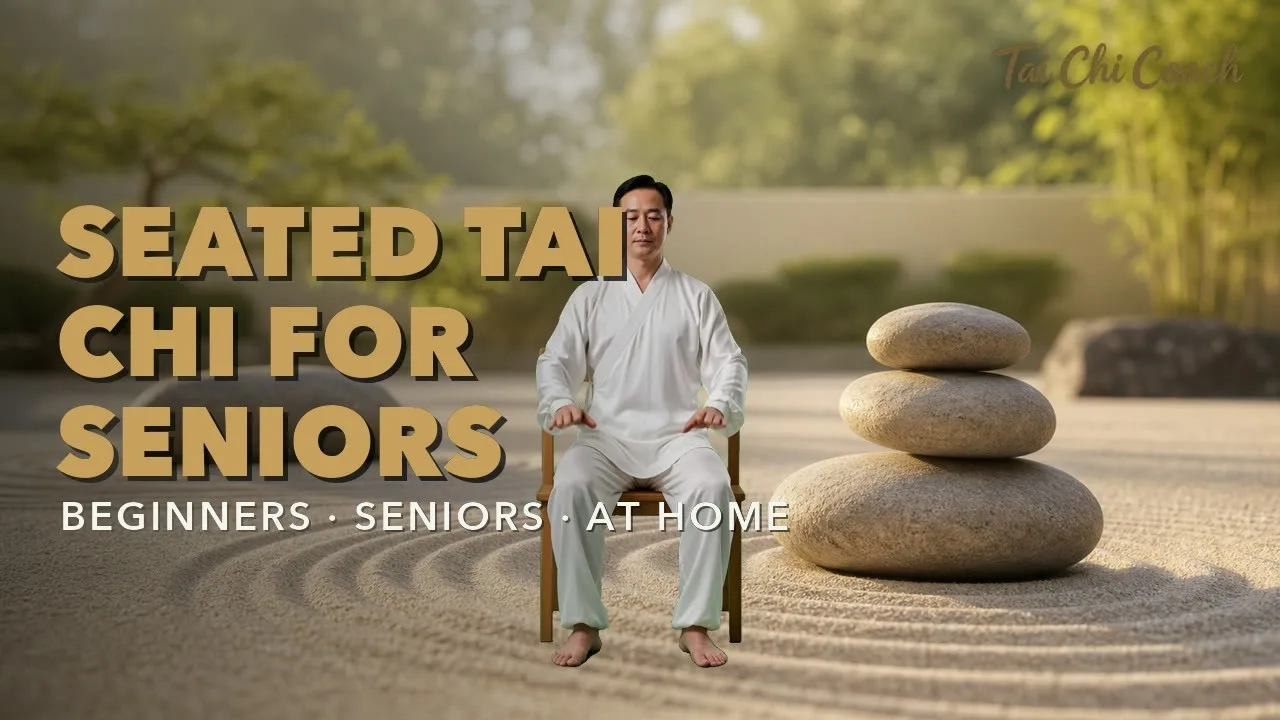
Watch: 8-Minute Seated Tai Chi Routine
A full follow-along session you can do from your chair right now.
Page guide
Looking for chair Tai Chi?
Use the main seated Tai Chi page for the guided routine. Use the printable PDF page only if you want a one-page sheet.
Seated Tai Chi For Seniors: What Actually Works?
Seated tai chi for seniors is a gentle, chair-based practice that can improve balance, strength, and mental calm without high impact. You can start safely regardless of your current mobility.
If you want an easy place to start, use our Seated Tai Chi exercises page for chair-friendly routines, then build consistency with the 28-Day Program.
Table of Contents
Advanced Principles for Deeper Results
Once you master the foundational movements, you can explore deeper principles. This elevates your practice from physical exercise to a holistic mind-body discipline.
Intentional Slowness: The extreme slowness is not a limitation; it is the training. Moving slowly forces your muscles, particularly the stabilizers, to work with maximum control. It reveals and corrects imbalances you cannot feel at normal speed. Rooting and Weight Shifts: Even while seated, you practice "rooting" through your sit bones and feet. You then perform subtle, intentional weight shifts from side to side or front to back. This is the core of balance retraining, teaching your body to control its center of gravity. Breath as the Guide: Your breath should lead every movement, not follow it. Inhale to prepare or expand; exhale to move or exert. This diaphragmatic breathing massages internal organs, oxygenates blood fully, and regulates the nervous system. Mental Visualization: As you perform a movement like "Seated Leg Lift," vividly visualize energy flowing down your leg. This mind-muscle connection enhances neuromuscular recruitment, making the physical work more effective. The mind directs the *qi* (vital energy).Creating Your Home Practice Space
Your environment significantly impacts your practice consistency and quality. You do not need a large space, but an intentional one. We recommend setting up a dedicated "practice corner."
Choose a quiet area with minimal distractions and enough room to extend your limbs fully. Ensure the lighting is calm and natural if possible. Place your sturdy chair on a firm, non-slip surface—a yoga mat or carpet gripper underneath adds security. Have any aids nearby, like a light resistance band or water bottle.
Consider adding a simple element to signal practice time, like a specific lamp you turn on or a small plant on a nearby table. This ritual cues your brain to transition into a focused state. Your practice space should feel inviting and peaceful, a personal sanctuary for your well-being.
For the short, evidence-only answer, read does chair tai chi work?
FAQ
Do I need any special equipment?You only need a sturdy, armless chair. We recommend one without arms to allow for unrestricted upper body movement. Optional items include a yoga mat under the chair for stability and comfortable clothing.
Can I do this if I have severe arthritis or have had joint replacements?Yes, absolutely. The gentle, non-impact motions can significantly reduce stiffness and improve range of motion. Always move strictly within a pain-free range, avoid extreme angles, and have your surgeon or physiotherapist approve your specific movements.
How quickly will I see tangible results?You may feel more mentally relaxed and loose after a single session. Measurable improvements in balance, like feeling steadier while standing, and noticeable gains in leg strength often take 4-6 weeks of consistent, daily practice. The body adapts progressively.
Is it safe if I have very poor balance or use a walker?Yes, that is its primary design purpose. The chair provides full, continuous external support while you safely retrain your internal balance systems. You can practice right next to your walker for added security. We design all exercises with this level of safety in mind.
Can seated tai chi help with conditions like Parkinson's or after a stroke?Extensively. Research shows tai chi improves gait, coordination, and motor control in Parkinson's. For stroke recovery, it aids in re-establishing mind-body connections and balance. Always practice under the guidance of your healthcare team and a qualified instructor.
Ready to experience the proven, life-changing benefits for yourself? Start your journey today with our science-backed, guided beginner program. It is designed specifically for senior safety, building true capability, and delivering the results you deserve.
How does chair tai chi work?Chair tai chi adapts the slow, flowing movements of standing tai chi to a seated position. You do gentle arm circles, weight shifts, and controlled breathing while the chair supports your spine. This keeps the balance, coordination, and calm-focus benefits of traditional tai chi while removing fall risk, which is why it suits people with limited mobility, low stamina, or joint pain.
How effective is chair tai chi for seniors?It is effective for improving upper-body flexibility, posture, circulation, and relaxation, and research on tai chi in older adults links regular practice to better balance confidence and less stiffness. Because it is low-intensity, results build gradually — most people notice easier movement and a calmer mood within a few weeks of short daily sessions.
New: the 28-Day Chair Tai Chi Plan
Want structure instead of single routines? The app includes a 28-day plan you do entirely from a chair — 18 seated movements, about 5-10 minutes a day, built for limited mobility, recovery, and low-energy days. Day 1 is free; the full plan comes with Premium.
See the 28-day chair planFree printable routine
Get the one-page seated routine as a PDF. Print it, put it on the fridge, start today.
🎁 Bonus: a printable 28-day tracking calendar
We can email it to you too — tick off each day and enjoy one gentle reminder a week.
No thanksWant the full printable pack?
28 illustrated movements + 28 full-page cards + 6 planners; $9.90 one-time.
Yes, show me the packYour PDF is opening in a new tab.Next step
Ready for your next Tai Chi session?
Open Tai Chi Coach for guided beginner-friendly practice you can follow step by step.