

Reviewed by Tai Chi Coach Editorial Team
Reviewed for source accuracy, safety framing, and scope clarity on 2026-03-04. This is educational wellness content, not diagnosis or treatment advice. See our Editorial Policy.
Can Tai Chi Improve Stress and Sleep After Cancer Treatment? 2025 Clinical Data Explained
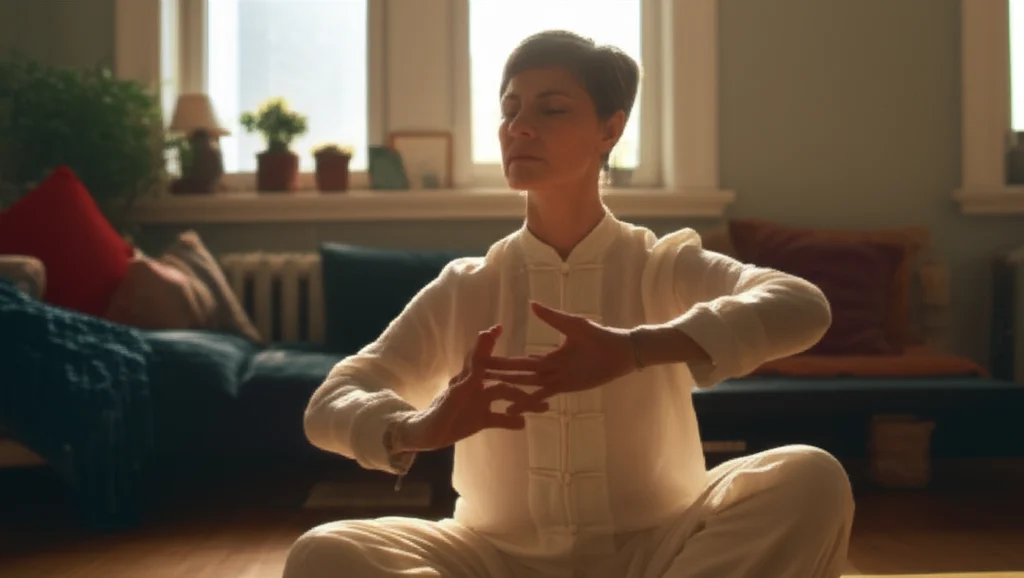
Watch the video summary
Subtitles are available in your page language and English.
Subtitle files: .vtt (English)
Can Tai Chi Improve Stress and Sleep After Cancer Treatment? 2025 Clinical Data Explained
Table of Contents
- Bottom line first
- What 2025 clinical studies found
- How to interpret the evidence
- An 8-week gentle return plan
- Common mistakes
- FAQ
Bottom line first
Yes, Tai Chi and Tai Chi/Qigong-style programs can support stress and sleep regulation during survivorship. Two 2025 studies showed meaningful improvements in psychological outcomes, with additional signals for sleep and cognition in specific groups.
What 2025 clinical studies found
MATCH trial (J Clin Oncol, 2025)
- Sample: 587 participants
- Mean age: 60.7 years
- Women: 75%
- Result: Tai Chi Qigong and mindfulness groups showed better emotional symptom improvement versus waitlist.
Source: - PubMed 40505072
Breast cancer survivor RCT (Complement Ther Clin Pract, 2025)
- Sample: 167 participants
- Program: 8 weeks, 60 minutes weekly
- Result: In survivors with moderate fatigue, the intervention improved sleep, anxiety, and cognitive outcomes.
Source: - PubMed 40651067
| Study | Sample | Duration | Key outcome |
|---|---|---|---|
| MATCH (2025) | 587 | Multi-site | Better emotional symptom profile |
| BCS RCT (2025) | 167 | 8 weeks | Better sleep, anxiety, cognition |
How to interpret the evidence
This is not a performance training model. It is a regulation model. The goal is to reduce nervous-system load while rebuilding confidence and routine.
What works best in practice:
- Start short and controlled
- Stabilize breath before complexity
- Use evening sessions 60-90 minutes before bed
Reminder: this is a complement to oncology care, not a replacement.
An 8-week gentle return plan
Weeks 1-2
- 4 sessions per week
- 8-10 minutes
- Goal: regain movement confidence
Weeks 3-4
- 4-5 sessions per week
- 12-15 minutes
- Goal: breath-movement synchrony
Weeks 5-6
- 5 sessions per week
- 15-18 minutes
- Goal: pre-sleep nervous-system downshift
Weeks 7-8
- 5 sessions per week
- 20 minutes
- Goal: reduce stress variability
Track these metrics:
- Sleep-onset duration
- Night awakenings
- Evening anxiety score (0-10)
Comparison table
| Approach | Difficulty | Sleep support | Adherence |
|---|---|---|---|
| Tai Chi + breath work | Low to medium | High | High |
| High-intensity training only | Medium to high | Variable | Medium |
| Passive rest only | Low | Limited | Medium |
Common mistakes
- Trying to return to old intensity too early
- Scheduling sessions too close to bedtime
- Ignoring breath pacing
- Measuring progress only by physical strength
Progress in survivorship is often nonlinear. Use trend tracking, not single-day judgments.
FAQ
Is Tai Chi safe after chemotherapy?
For many people, yes, with medical clearance and appropriate progression.
What time is best for sleep goals?
Usually 60-90 minutes before bedtime with a calm sequence.
Group class or app-based program?
Both can work. Choose the format you can maintain consistently.
2025 clinical evidence supports Tai Chi as a practical support tool for stress and sleep in cancer survivorship care.
Next step
Follow a gentle recovery routine
Open Tai Chi Coach for a calm recovery-focused routine designed to support steadier sleep and lower stress alongside your medical plan.