Chair Yoga for Seniors, Stiff Joints, and Desk Workers
Quick answer: Chair yoga is gentle yoga done sitting down, so seniors and anyone with limited mobility get the stretching, posture and breathing benefits without any floor work or balance risk. Eight poses, about ten minutes, on any sturdy chair.
Print the free one-page routine below and start today. No class, no equipment, no subscription.
Get all eight seated poses on one printable page. No payment, no card - just the PDF.
We can email it to you too — tick off each day and enjoy one gentle reminder a week.
No thanks28 illustrated movements + 28 full-page cards + 6 planners. The standing program is included free.
Yes, show me the packYour PDF is opening in a new tab.


Our 28-day pack is a chair Tai Chi programme, not yoga - a slower, flowing practice that pairs well with the yoga routine above. 28 illustrated daily movements, 28 full-page cards and 6 printable trackers. A4 + US Letter. One payment, yours forever, no subscription.The 28-day standing and walking programmes are included too.
A perfect solution for specific needs.
Keep mobility, posture and circulation without any of the balance risk that standing routines carry.
Gentle, supported range-of-motion work for stiff hips, knees, shoulders and hands, at whatever range you have today.
A ten-minute reset for tech neck, tight hip flexors and a rounded upper back, done without leaving your chair.
Prefer a slow flowing practice instead of held stretches? Try the free seated Tai Chi routine. For a strength-focused seated session see our chair exercises for seniors PDF, and for the background read free chair yoga for seniors. If you can stand safely, Tai Chi Walking is the next step.
Yes, for what it is actually for. Chair yoga will not raise your heart rate the way walking does, but the evidence for gentle, regular range-of-motion work is solid: it helps with joint stiffness, posture, circulation and stress. What matters is that you do it most days, which is exactly what sitting down makes possible.
The goal of seated practice is not to touch your toes. It is to keep every joint moving through the range you already own, because unused range is what disappears first.
Fear of falling is the single biggest reason older adults stop exercising. Taking balance out of the equation is what makes a routine one people actually repeat on day 90.
Pairing each movement with a slow exhale shifts the nervous system out of stress mode. This is why a ten-minute seated routine can feel disproportionately calming.
Work through the poses in order on a sturdy chair. Move slowly, never push into pain, and stop at the range that feels easy today - that range grows on its own.
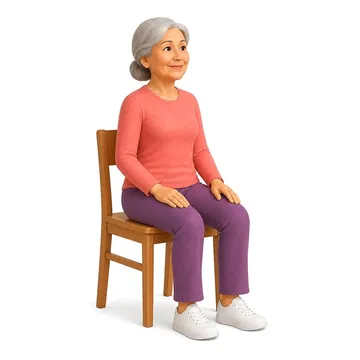
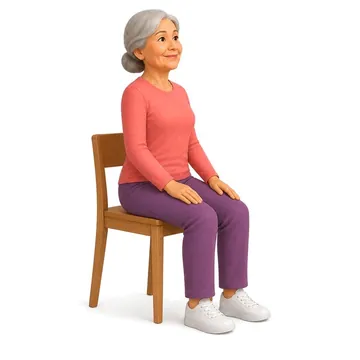
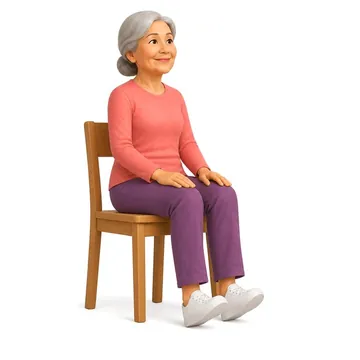
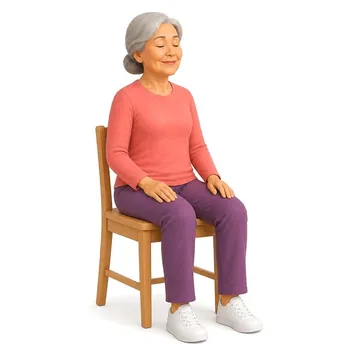
Sit tall on the front third of a sturdy, armless chair with both feet flat and hip-width apart, knees over your ankles. Let your hands rest on your thighs, draw the shoulders down and back, and lengthen through the crown of your head. Take five slow breaths here before you move.
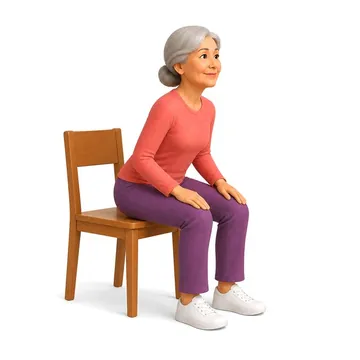
Place your hands on your knees. Inhale, arch gently, lift the chest and look slightly up. Exhale, round the spine, tuck the chin and draw the navel back. Move with the breath for six rounds; keep the range small if your back is sensitive.
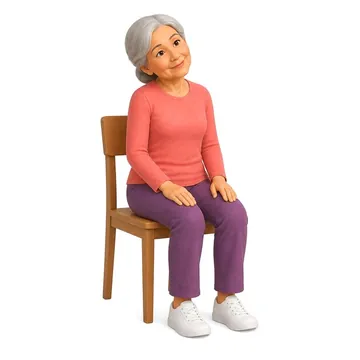
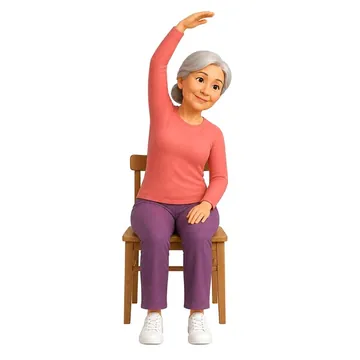
Inhale and float your right arm up beside your ear. Exhale and lean gently to the left, keeping both sitting bones on the chair. Breathe three times into the right ribs, come back up, and repeat on the other side.
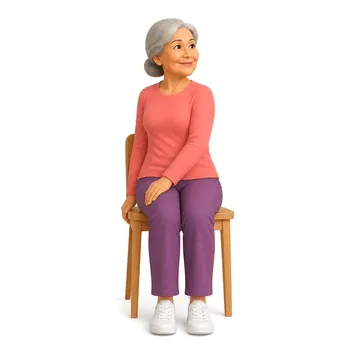
Place your right hand on your left knee and your left hand on the chair beside you. Inhale to grow tall, exhale to turn gently to the left, leading from the ribs rather than the neck. Hold for three breaths and repeat on the other side.
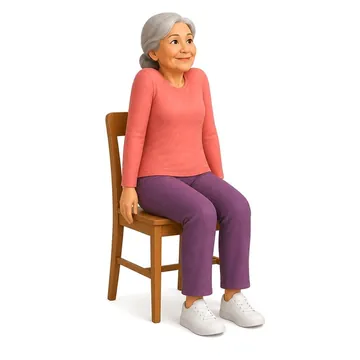
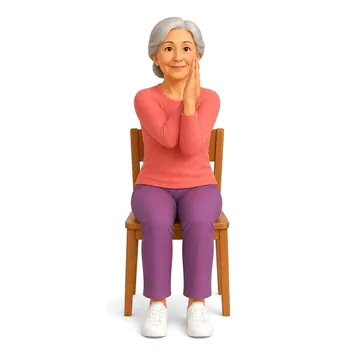
Cross your right elbow under your left, then wrap the forearms and bring the palms or the backs of the hands together. Lift the elbows slightly and breathe into the space between your shoulder blades for three breaths. Switch the cross of the arms and repeat.
With your feet flat and knees apart, inhale to lengthen the spine, then exhale and hinge forward from the hips, letting your hands slide down your legs. Go only as far as feels easy, rest for three breaths, and roll up slowly.
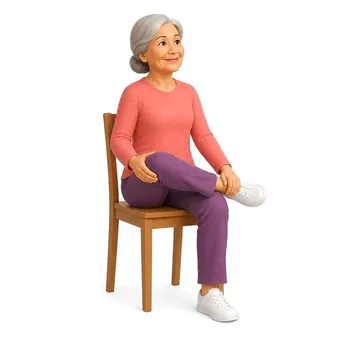
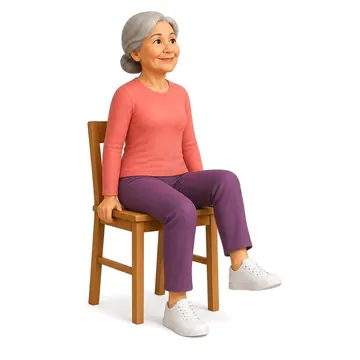
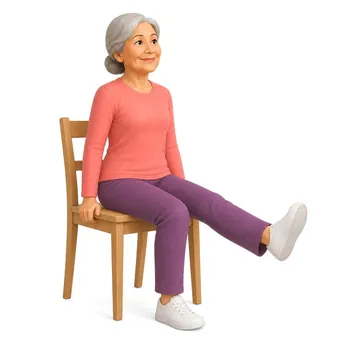
Straighten your right leg and circle the ankle five times each way, then swap legs. Extend both arms and circle the wrists five times each way. This is the joint-mobility part of the routine and it matters more than it looks.
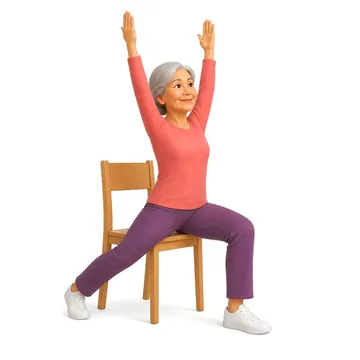
Turn slightly to the right on the chair, open the arms wide at shoulder height, palms down, and look over your right hand. Hold for four strong breaths, feeling the upper back work, then repeat on the left side and finish with both hands resting on your thighs.
Every pose above is on the free printable PDF, in the same order, with the breathing cues.
The printable routine on this page is free, with no payment and no card. You give an email address and the PDF opens immediately. Plenty of free chair yoga also exists on YouTube and through library and community programmes. Paid apps and classes are optional, not necessary.
Nothing, if you use a free printable or a free video. Paid chair yoga apps typically charge about 19 to 59 US dollars a year, and in-person senior classes usually run 5 to 20 dollars a session. Our own printable pack is a one-time $9.90 and is optional; there is no subscription on this site.
For its actual goals, yes. Seated practice will not replace cardiovascular training, but a short daily routine can help with joint stiffness, posture, range of motion, circulation and stress. Improvements usually show up over weeks of regular practice rather than in a single session.
It is one of the safest ways to keep moving after 65, because the chair removes the balance risk that makes standing routines difficult. If you have had recent surgery, a fall, uncontrolled blood pressure or acute joint pain, check with your doctor before you begin.
No. Use a stable dining chair without armrests, or sit forward on the edge of one, so your arms can move freely. Both feet should reach the floor; if they do not, put a book or a folded towel under them.
Ten minutes a day beats forty minutes once a week. The printable routine on this page is built for about ten minutes, and you can do half of it on a bad day and still get the benefit.
Chair yoga holds shapes and stretches while you breathe. Seated Tai Chi moves continuously in slow, flowing circles. Yoga tends to open tight areas faster; Tai Chi tends to be gentler on sore joints and better for coordination. Many people alternate them, and this site has free printables for both.
Our free iPhone app is a Tai Chi app, not a yoga app - but its seated category covers the same gentle, chair-based territory.
Price & Availability
Major health institutions report that gentle, regular movement such as chair-based yoga may support flexibility, balance and stress management in older adults.
Concise answers to common pre-purchase questions and objections.
Related free routines