

Reviewed by Tai Chi Coach Editorial Team
Reviewed for source accuracy, safety framing, and scope clarity on 2026-06-25. This is educational wellness content, not diagnosis or treatment advice. See our Editorial Policy.
Does Tai Chi Walking Work? An Evidence-Led Look
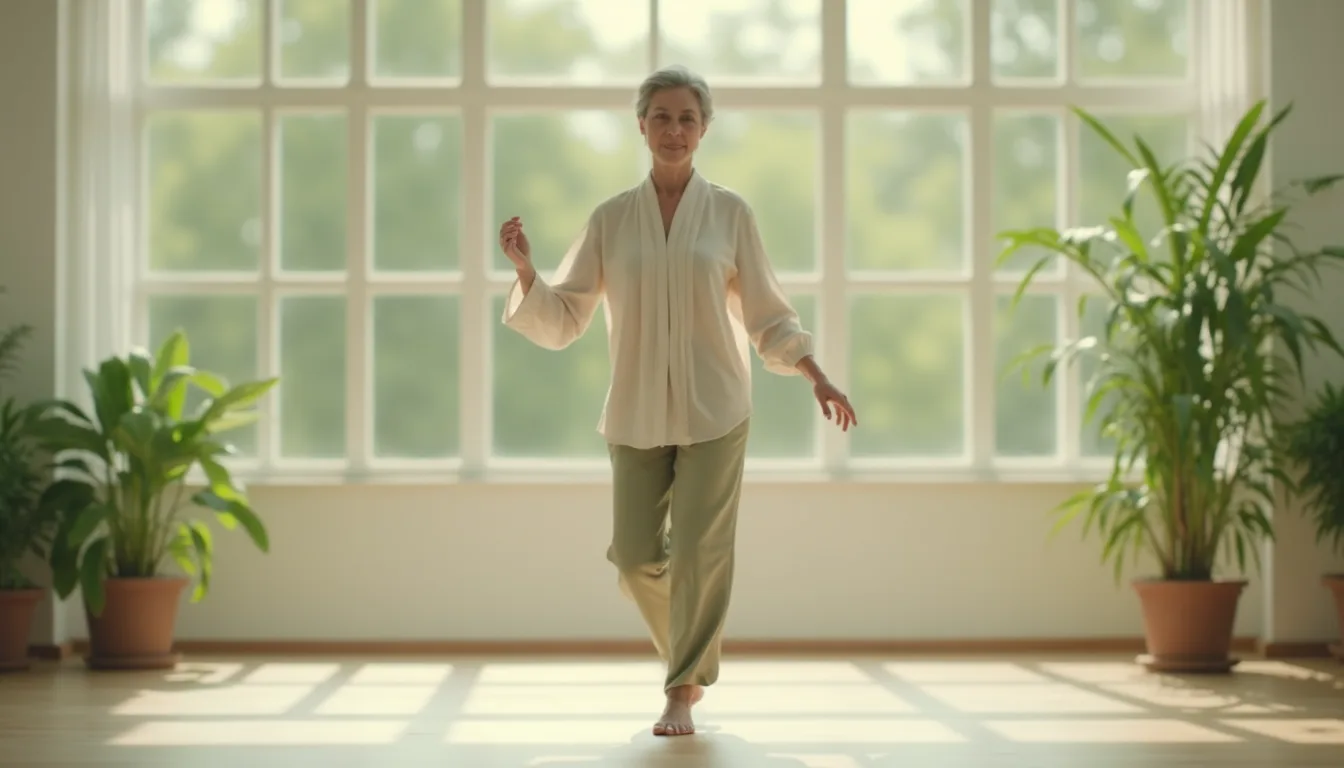
Does Tai Chi walking work? For the things it is actually designed to do, yes. Combining slow stepping, soft Tai Chi arm movements, and deep breathing is a gentle, low-impact practice that research links to better balance, less stress, and easier everyday movement. What it is not is a high-intensity workout, so it will not replace vigorous cardio or do the heavy lifting of major weight loss on its own. Used as a daily 10-minute habit, though, it is one of the most realistic ways for beginners and older adults to stay consistently active.
- It works for what it claims: balance, mobility, calm focus, and gentle daily movement are all evidence-aligned benefits.
- Strongest evidence is for balance and falls: Tai Chi-style movement is widely recommended for fall prevention in older adults.
- It is genuinely low-impact: no jumping, no equipment, easy on the joints, doable indoors in a small space.
- It is not intense cardio: expect light-to-moderate activity, not heart-pounding exercise.
- Consistency is the active ingredient: 10 minutes most days beats an occasional long session.
What "Working" Actually Means Here
Before judging whether Tai Chi walking works, it helps to be clear about the goal. This is a form of walking meditation: you step slowly in place or across a small room while doing flowing arm movements like Cloud Hands or Gathering Qi, paired with slow, deep breathing. The aim is gentle, mindful movement, not maximum calorie burn. So "does it work?" is really four separate questions, and the answer is encouraging for the ones that match the practice's design.
You can read the full step-by-step method on our pillar guide, Tai Chi Walking: A Gentle Indoor Routine, which also includes a free printable 7-day routine.
What the Evidence Says It Helps
Tai Chi is one of the better-studied mind-body practices, and the gentle stepping-and-breathing style used in Tai Chi walking shares its core movements. Here is where the research is most supportive.
Balance and fall prevention
This is the strongest area. According to the National Center for Complementary and Integrative Health (NCCIH), Tai Chi can improve balance and stability in older adults and in people with conditions like Parkinson's. The CDC also includes Tai Chi-based programs among the evidence-based options it recognizes for reducing falls among older adults. Slow weight-shifting from foot to foot is exactly the kind of controlled practice that trains balance.
Stress and calm focus
Pairing slow movement with deep breathing engages the body's relaxation response. Harvard Health has described Tai Chi as "meditation in motion," and reviews summarized by NCCIH suggest it may help with stress, mood, and a general sense of well-being. If you would like more on this, see Tai Chi as meditation in motion.
Gentle activity and mobility
For people who find brisk walking, the gym, or floor exercises too much, Tai Chi walking offers a way to be active without strain. It keeps the hips, knees, ankles, and shoulders moving through a comfortable range, which can support flexibility and ease of everyday movement. Because it is low-impact and needs no equipment, it is realistic to do every day, and consistency is what makes any activity "work" over time.
What It Does Not Do
Being honest about the limits is part of the answer.
- It is not intense cardio. Tai Chi walking is light-to-moderate activity. It will gently raise your breathing, but it will not deliver the cardiovascular load of running, cycling, or a brisk power walk.
- It is not a standalone weight-loss program. The calorie burn is modest. It can absolutely be a helpful, sustainable piece of a weight-management routine, but on its own it will not melt fat. We cover realistic expectations in Tai Chi walking for weight loss.
- It is not strength training. It supports leg and core stability, but it will not build muscle the way resistance work does.
- It is not a medical treatment. It can complement care, but it does not replace advice from your doctor or physical therapist.
Tai Chi Walking: What Works vs. What Doesn't
| Goal | Does it work? | Why |
|---|---|---|
| Better balance / fewer falls | Yes, strong support | Slow weight-shifting trains stability; recognized by NCCIH and CDC |
| Stress relief and calm | Yes | Slow breathing plus mindful movement, "meditation in motion" |
| Gentle daily activity and mobility | Yes | Low-impact, joint-friendly, easy to sustain |
| Major weight loss | Partially / supportive only | Modest calorie burn; helps as part of a broader routine |
| High-intensity cardio fitness | No | Intentionally gentle and low-impact |
How to Make It Actually Work for You
Whether Tai Chi walking "works" depends a lot on how you use it. A few simple habits make the difference:
- Keep it short and daily. Aim for about 10 minutes most days rather than one long weekly session. Routine is what produces results.
- Go slow on purpose. The slowness is the point. Controlled weight-shifting is what trains your balance.
- Breathe with the movement. Let your arms rise on the inhale and settle on the exhale to engage the calming effect.
- Use support if you need it. Stand near a wall, chair, or counter at first. If standing is difficult, a seated version still delivers many benefits.
- Pair it with realistic goals. Treat it as your gentle daily movement and stress reset, not your only form of exercise.
Older adults and beginners often find a structured start easiest. Our free Tai Chi walking guide for seniors and the indoor Tai Chi walking routine both keep things simple and safe. If you would rather sit, see seated Tai Chi, and if you are over 50, our Tai Chi for 50+ resources are a good fit. To build a lasting habit, the 28-day program gives you day-by-day structure.
The Bottom Line
So, does Tai Chi walking work? Yes, for the gentle, realistic goals it is built around: steadier balance, lower stress, easier movement, and a sustainable daily activity habit. It is not a shortcut to intense fitness or rapid weight loss, and it is most effective when you do a little every day rather than occasionally pushing hard. For most beginners, seniors, and anyone seeking low-impact movement, that combination of modest benefits and high consistency is exactly what makes it worth doing.
Frequently Asked Questions
Does Tai Chi walking really work, or is it too gentle to matter?
It works for what it is designed to do. Tai Chi walking is genuinely gentle, but research linked by NCCIH and the CDC supports Tai Chi-style movement for improving balance, reducing falls in older adults, and easing stress. The gentleness is a feature, not a flaw, because it lets you practice consistently, which is what produces results over time.
How long before Tai Chi walking shows results?
Many people notice they feel calmer and steadier within a few weeks of daily practice. Balance and mobility gains build gradually, so the best results come from doing about 10 minutes most days over a couple of months rather than from a single long session.
Can Tai Chi walking help me lose weight?
It can help as part of a broader routine, but it is not a standalone weight-loss program. The calorie burn is modest because the practice is low-intensity by design. It works best for weight management when paired with a balanced diet and, where possible, other movement you enjoy.
Is Tai Chi walking good cardio?
It provides light-to-moderate activity, not vigorous cardio. It will gently raise your breathing and heart rate, which is beneficial, but it will not match the cardiovascular intensity of running, cycling, or a brisk power walk.
Is Tai Chi walking safe for seniors and beginners?
Yes. It is low-impact, requires no equipment, and can be done indoors near a wall or chair for support. Beginners and older adults are exactly who it suits best. If you have a medical condition or balance concerns, check with your doctor and consider starting with a seated version.
Free printable routine
Get the one-page seated routine as a PDF. Print it, put it on the fridge, start today.
🎁 Bonus: a printable 28-day tracking calendar
We can email it to you too — tick off each day and enjoy one gentle reminder a week.
No thanksWant the full printable pack?
28 illustrated movements + 28 full-page cards + 6 planners; $19.90 one-time.
Yes, show me the packYour PDF is opening in a new tab.Next step
Start Tai Chi Walking Today
Ready to put the evidence into practice? Download the free Tai Chi Coach app for iPhone and follow gentle, guided Tai Chi walking sessions you can do in about 10 minutes a day, right in your living room. No equipment, no experience needed, just press play and start moving.
Download the App